
Crate training teaches a dog to rest calmly in a crate, so the crate becomes a normal, quiet place to settle, sleep and take a break. To crate train a puppy, pick a crate the puppy can stand and turn around in, introduce it calmly, then build up from a few minutes with the door closed to naps and full nights. Most puppies adjust within a few days to a few weeks.
- 1Pick the right size crate and a quiet spot
- 2Introduce it calmly with food or treats
- 3Close the door for short stretches while home
- 4Release only when the puppy is calm
- 5Use it for daytime naps, not just when leaving
- 6Work up to sleeping in it overnight
A new puppy changes the whole house. Within a day you’re wondering where it should sleep, how to stop the 3 a.m. crying and how to keep it from chewing the couch while you make coffee. A crate solves a lot of that, but only if the puppy learns to like being in it.
This guide is based on how Juan Portillo, lead trainer at JPK9 Academy in Elk Grove, crate trains puppies and adult dogs. Juan has trained dogs for more than 15 years and worked with over 500 of them. Crate training puppies is part of almost every puppy program he runs, and part of the daily routine for dogs in his board and train program.
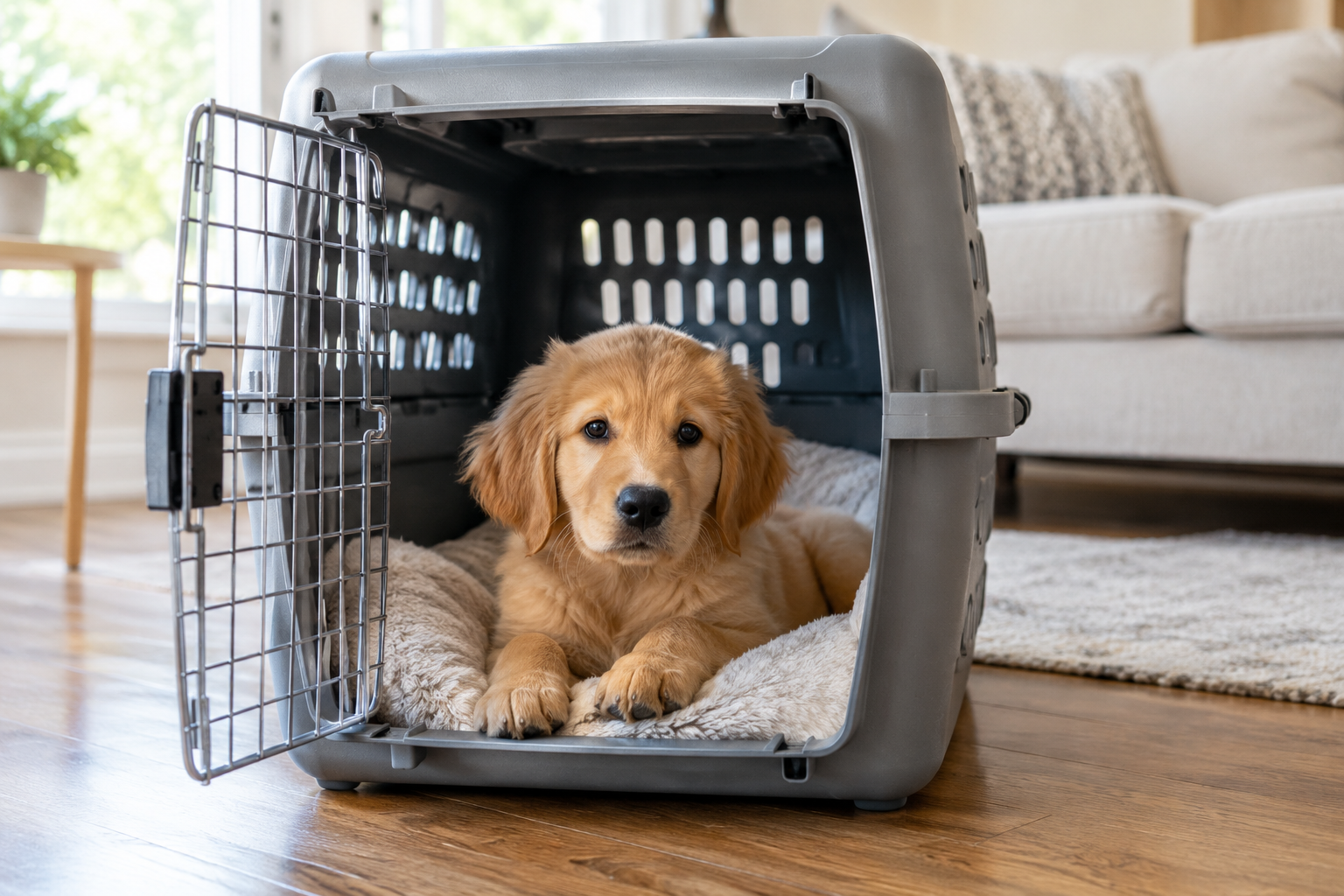
What Is Crate Training?
When people say a dog is crate trained, they mean the dog walks into its crate without a fight, settles down and stays quiet until it’s let out. It isn’t about locking a dog away. A crate trained dog has a place in the house where it knows how to switch off.
“I want the dog to understand that the kennel is a normal place to relax, settle, and take a break.”Juan Portillo, JPK9 Academy
Trainers often say “kennel” and “crate” for the same thing. Juan uses the word kennel, so you’ll see both here.
Is Crate Training Good for Dogs?
For most puppies and dogs, yes. A crate keeps a puppy safe when you can’t watch it, helps with potty training and teaches the puppy to calm down on its own. It also makes vet visits, travel and boarding a lot less stressful later, because the dog already knows how to rest in a small space.
But it isn’t right for every dog at every moment. Here’s how to tell the difference:
Crate training usually helps when
- You have a new puppy that needs a safe place to nap
- You’re potty training
- Your dog chews or gets into things when unsupervised
- Your dog struggles to settle and needs to learn downtime
- You plan to travel or board your dog
Slow down and get help if
- Your dog panics, drools heavily or tries to break out
- Your dog has hurt itself in a crate before
- Your dog shows signs of separation anxiety
- Your dog would be crated most of the day, every day
With separation anxiety in particular, a crate can help some dogs and make others much worse. Juan’s advice: don’t force it. A dog that panics in confinement needs a gradual plan, sometimes with a board certified veterinary behaviorist involved. There’s more on that in the guide to separation anxiety training.
When to Start Crate Training a Puppy
Start the day your puppy comes home, whether that’s at 8 weeks or 6 months. Juan introduces the crate as part of the puppy’s routine from the very beginning, while still giving the puppy time to get used to a new home. Waiting a few weeks usually makes it harder, because by then the puppy has learned to sleep on the couch or in your bed.
An 8 week old puppy can absolutely be crate trained. It just needs very short sessions and frequent potty breaks. If you’re still getting ready for your puppy, the new puppy checklist covers what to buy and set up first.
Choosing the Right Crate Size and Type
The right crate is just big enough. Juan’s rule is simple. Your dog should be able to:
Too much space works against potty training, because a puppy may use one end as a bathroom and sleep in the other. If you buy a crate your puppy will grow into, use one with a divider and move it back as the puppy grows.
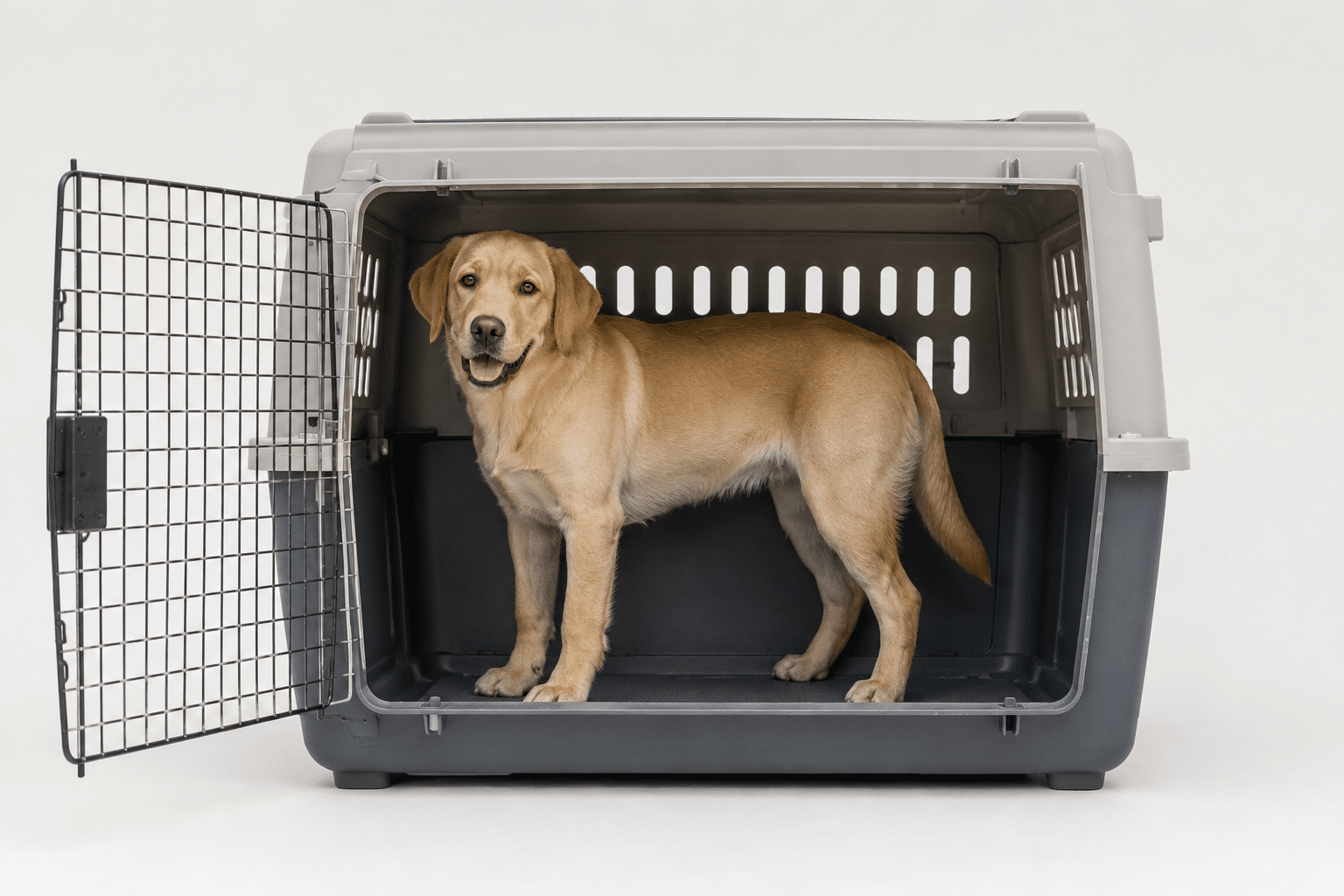
Plastic, wire or soft crate?
| Type | Good points | Watch out for |
|---|---|---|
| Plastic kennel Juan’s pick | Enclosed, den-like and durable. Many dogs settle faster when they can’t see everything going on. | Heavier to move, and must have good ventilation |
| Wire crate | Folds flat, easy to see into, often comes with a divider | Open on all sides, so busy households can keep a dog alert instead of resting |
| Soft-sided crate | Light and handy for travel | Easy to chew or push through, so not a good fit for training |
Juan uses plastic Vari Kennels and Ruff Land kennels in his own training and doesn’t use wire or soft crates. Whatever you choose, it should be the right size, secure and well ventilated.
How to Crate Train a Puppy in 6 Steps
The goal isn’t to get the puppy into the crate. It’s to get the puppy calm in the crate. Each step below builds on the last, so only move on when your puppy is ready.
-
1
Set up the crate in a quiet spot
Pick a calm place where the puppy can rest without constant traffic, but where it still feels part of the house. Keep the inside simple and clean. Add bedding only if your puppy doesn’t chew it.
Ready to move on: the crate is set up and stays in the same place -
2
Introduce the crate calmly
Leave the door open and let your puppy explore. Toss a few pieces of food or a treat inside so the crate starts to mean good things. Teach the puppy to walk in and come out calmly, instead of rushing the door.
Ready to move on: your puppy walks in on its own -
3
Close the door for short stretches while you’re home
Once your puppy is inside and relaxed, close the door for a minute or two while you stay nearby. Open it again before the puppy starts fussing. Repeat a few times a day.
Ready to move on: your puppy stays quiet for a few minutes with the door shut -
4
Build duration and teach settling
Slowly add time. The key detail: open the door when your puppy is calm, not when it’s whining or scratching. That’s how the puppy learns that settling down is what gets it out. Juan’s point is that you don’t want the dog relying on constant treats or attention to stay calm.
Ready to move on: your puppy lies down and settles on its own -
5
Make the crate part of everyday life
Use the crate for daytime naps while the house is busy, not only when you leave. If the crate only appears when you walk out the door, the puppy learns that the crate means being alone.
Ready to move on: your puppy naps in the crate during the day -
6
Work up to overnight sleep
Once daytime crate time is going well, move to full nights, making sure your puppy has had exercise and a potty break first. Juan works on daytime and nighttime sessions together, so the crate becomes part of the whole routine.
Done when: your puppy sleeps through the night in the crate, with potty breaks as needed
Crate Training a Puppy at Night
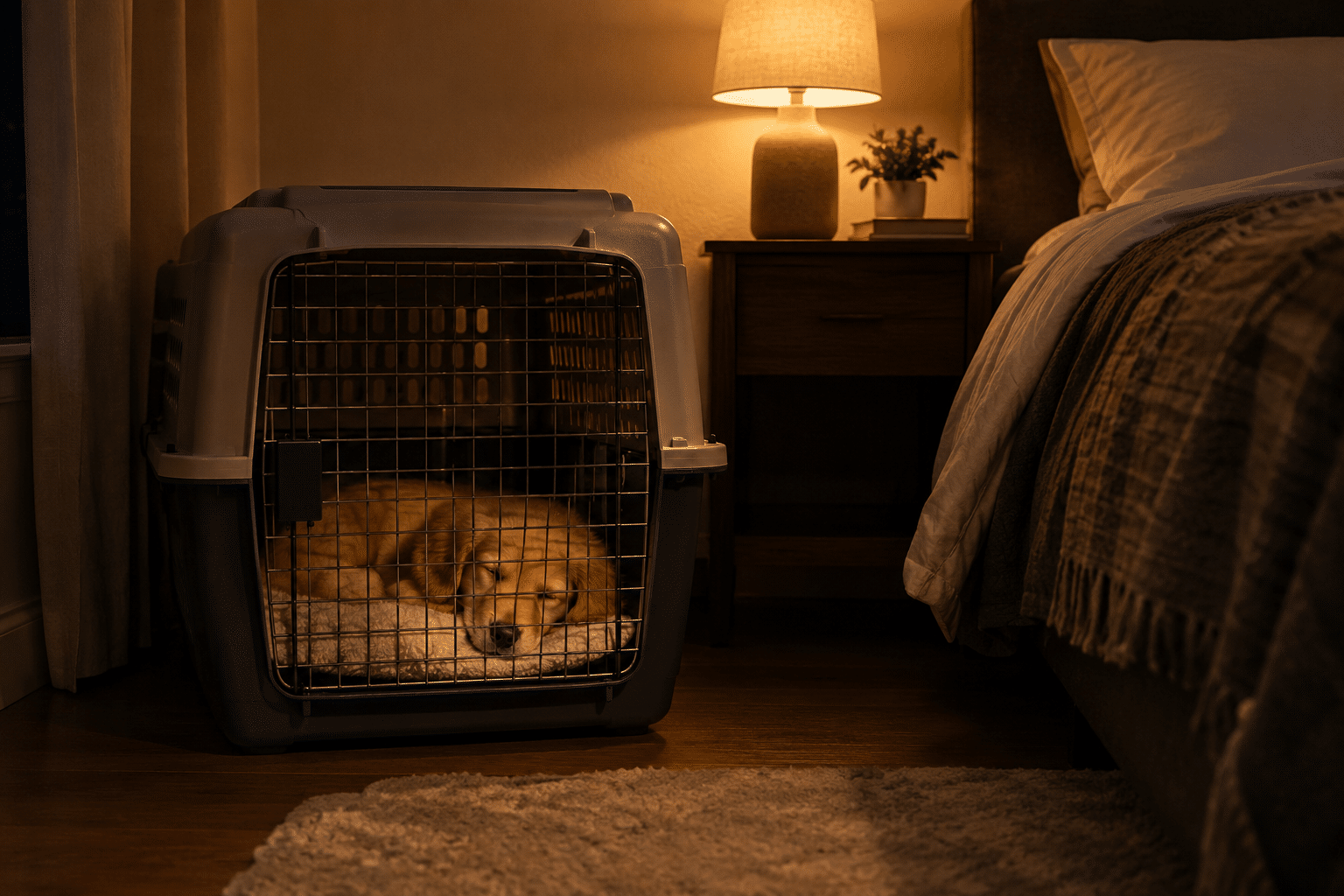
Crate training at night is where most owners lose sleep, and the first few nights are usually the hardest. A simple routine makes them much easier:
- Give your puppy some play and exercise in the evening, so it’s actually tired.
- Take your puppy out to potty right before bed.
- Put the crate near your bedroom for the first weeks. It’s easier to hear when your puppy needs to go out, and the puppy settles faster when you’re close.
- If your puppy wakes up needing to potty, take it out calmly, keep it quiet and boring, then put it straight back in the crate.
- Start the morning with a potty break right away.
How long a puppy can go overnight depends on its age and whether it can comfortably hold it through the night. Young puppies usually need at least one trip outside.
How Long Can a Puppy Stay in a Crate?
It depends on age, bladder control, activity level and the individual dog. These are the guidelines Juan works with:
| Very young puppies (awake) | A potty break every 1 to 2 hours while they’re awake |
| Puppies under 6 months | No more than 3 to 4 hours at a time, according to Humane World for Animals, building up slowly as bladder control improves |
| Adult dogs (daytime) | Around 4 to 6 hours for many dogs, though every dog is different |
| Overnight | Depends on age and whether the dog can comfortably last the night |
A crate is for rest, not for storing a dog all day. If your dog would be crated most of the day, plan for a midday walk, a dog walker or daycare.
Using the Crate for Potty Training
Most dogs don’t like to soil where they sleep, which is why a right-sized crate is one of the best potty training tools. The crate teaches the puppy to hold it for short periods, and you take it straight outside when you open the door.
A crate is one piece of potty training, not all of it. Take your puppy out after naps, meals and play, and praise it for going in the right spot. For the full routine, see how to potty train a puppy and what age a dog should be potty trained.
What to Do When Your Puppy Cries in the Crate
This is the question almost every new owner asks. Juan doesn’t recommend letting a puppy out every time it makes noise, because that teaches the puppy that crying opens the door. But he doesn’t recommend blindly ignoring it either. First figure out why the puppy is crying:
“A dog that is trying to escape can seriously injure itself, so I don’t believe in forcing it to struggle until it gives up.”Juan Portillo, JPK9 Academy
What Should Go Inside the Crate?
Keep it simple. A clean, comfortable crate is better than one full of stuff.
Crate Training an Adult or Rescue Dog
Adult dogs can learn to love a crate too, and many adjust just as fast as puppies. The difference is history. A rescue dog that was confined for long periods, or had a bad experience in a kennel, may need a lot more time.
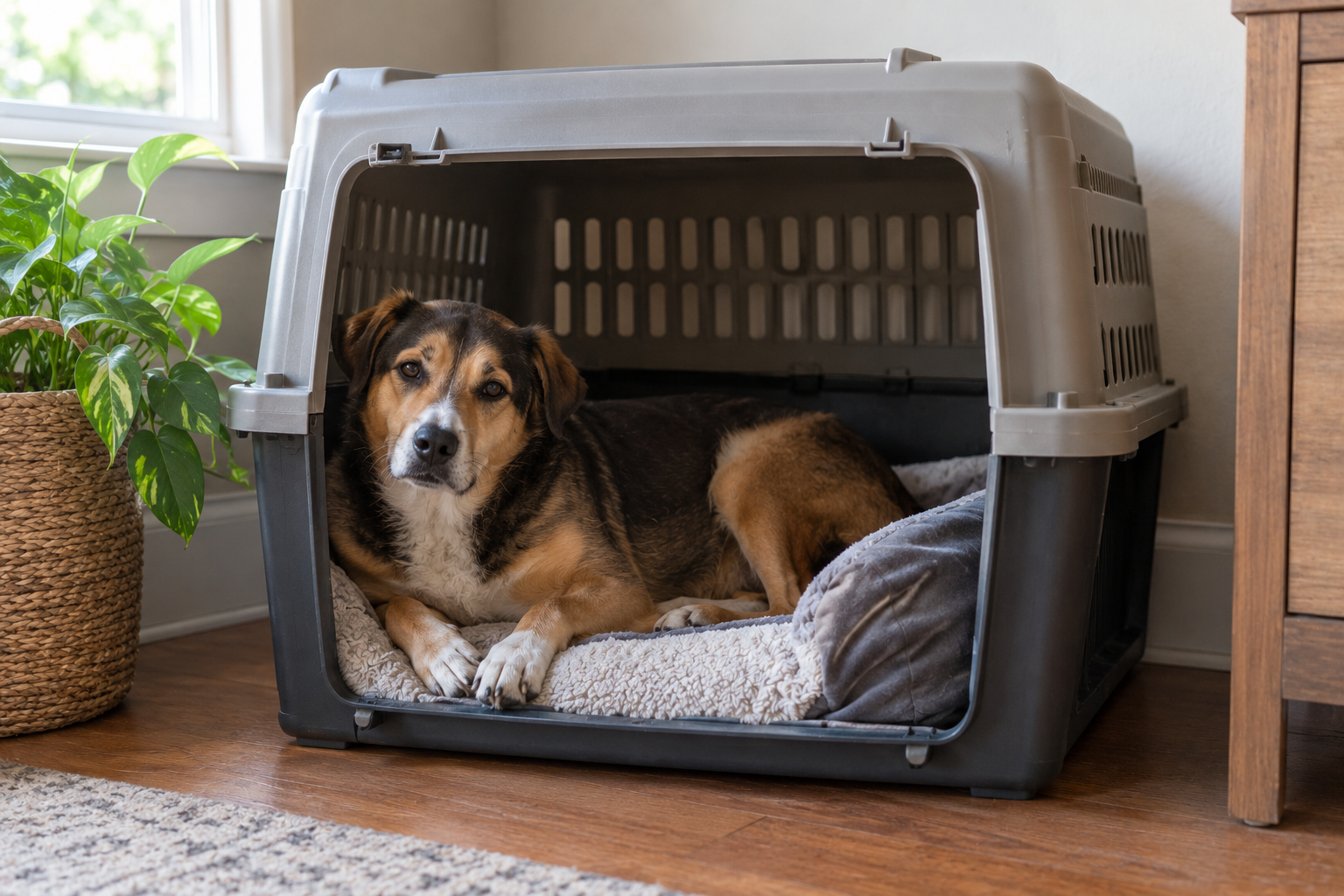
Follow the same 6 steps, but go slower and let the dog set the pace. Keep the door open longer at the start, keep sessions short, and watch for signs of real distress. If your dog panics in confinement, don’t push through it. Dogs like that need an individual plan, often as part of behavior modification.
The Mistakes That Make Crate Training Harder
These are the ones Juan sees most often with new puppy owners.
- Too much freedom too soon. A puppy that has the run of the house before it’s ready keeps practicing habits you don’t want.
- Only using the crate when leaving. Then the crate predicts being alone. Use it while you’re home too.
- Crating too long. Long stretches without a break set potty training back and make the crate feel like a trap.
- Moving too fast. Jumping from two minutes to two hours skips the part where the puppy learns to settle.
- Ignoring the why. Crying, chewing or escaping always has a reason. Figure it out before the behavior becomes a habit.
And one rule that never changes: the crate is never a punishment. Juan wants the crate to mean rest and downtime, not fear.
How Long Does Crate Training Take?
Every dog is different. Some puppies adjust in a few days, while others need a few weeks of consistent practice. Adult and rescue dogs may adjust just as quickly, but dogs with bad past experiences or anxiety about being confined can take a lot longer. Consistency matters more than speed. Short, daily sessions beat one long session on the weekend.
Need a Trainer’s Help With Your Puppy?
If your puppy cries all night, your dog panics in the crate, or you just want to get it right from day one, Juan can help. There isn’t a separate crate-training-only package, because Juan likes to see the dog first. Crate training is built into these programs:
4 in-home private sessions and 5 group classes. Juan sets up the crate routine with you at home and shows you how to keep it going.
See Puppy TrainingYour dog stays with JPK9 and rests in Vari Kennels and Ruff Land kennels as part of the daily routine, then you learn the routine at handoff.
See Board and TrainServing Elk Grove, Sacramento, Roseville, Folsom and nearby cities. Full pricing is in the guide to dog training costs in Sacramento.
About Juan Portillo
Juan Portillo is the lead trainer at JPK9 Academy in Elk Grove, California. He has trained dogs for more than 15 years and worked with over 500 of them, from new puppies to dogs with serious behavior problems. More about Juan
More Questions From Puppy Owners
Is it cruel to crate a dog?
Not when it’s done right. A crate that’s the right size and used for naps, nights and short breaks gives a dog a quiet place to rest. It becomes unfair when a dog is left in it for most of the day, or when it’s used as punishment.
Should a puppy sleep in a crate the first night?
Yes, if you can. Starting on night one keeps the routine simple. Put the crate near your bedroom, take the puppy out to potty right before bed, and expect at least one trip outside during the night.
Can I crate my puppy while I’m at work?
Not for a full workday. Puppies under 6 months shouldn’t stay in a crate more than 3 to 4 hours at a time, and very young puppies need a potty break every 1 to 2 hours while awake. Plan for a midday visit, a dog walker or daycare.
Can I move the crate from room to room?
You can, but a consistent spot helps a puppy settle faster. Many owners keep the crate near the bedroom at night and in a quiet corner of the main room during the day. Moving it once or twice a day is fine.
What if my puppy has an accident in the crate?
Clean it well so no smell is left, and look at why it happened. The crate may be too big, the puppy may have been in it too long, or it may have needed a potty break before going in. Don’t scold the puppy.
When can I stop closing the crate door?
When your dog stays calm, holds it reliably and doesn’t chew things when left alone. Give freedom slowly. Many dogs keep using an open crate as their bed for life.
Does crate training help with separation anxiety?
Sometimes, but not always. A crate can help some dogs feel settled, and for others confinement makes the panic worse. If your dog drools, tries to escape or hurts itself in a crate, stop and get help with a gradual separation plan.
Can JPK9 help with crate training?
Yes. Crate training is part of Puppy Private Training, which is $1,300 for 4 in-home private sessions and 5 group classes, and part of the daily routine in Board and Train. The first phone call with Juan is free.
Make the Crate Your Puppy’s Favorite Spot
A few weeks of consistent work now means a dog that can rest calmly for years. If you want a hand getting there, give Juan a call. The first call is free.