
To socialize a dog, expose the dog gradually to new people, dogs, places, sounds and surfaces at a distance where the dog stays calm, and pair every exposure with something good. Puppies socialize fastest inside the 3 to 14 week window through brief daily exposures, while adult dogs socialize through structured sessions over 2 to 6 months. The goal of dog socialization training is calm neutrality, not maximum friendliness: a socialized dog notices the world and ignores it.
The guide below covers the 6 step socialization process, the age windows, separate protocols for puppies and adult dogs, 7 effective techniques, the signs of a poorly socialized dog, the 5 mistakes that ruin the work, and where Sacramento area owners can run safe exposures, from the training team at JPK9 Academy in Elk Grove, California.
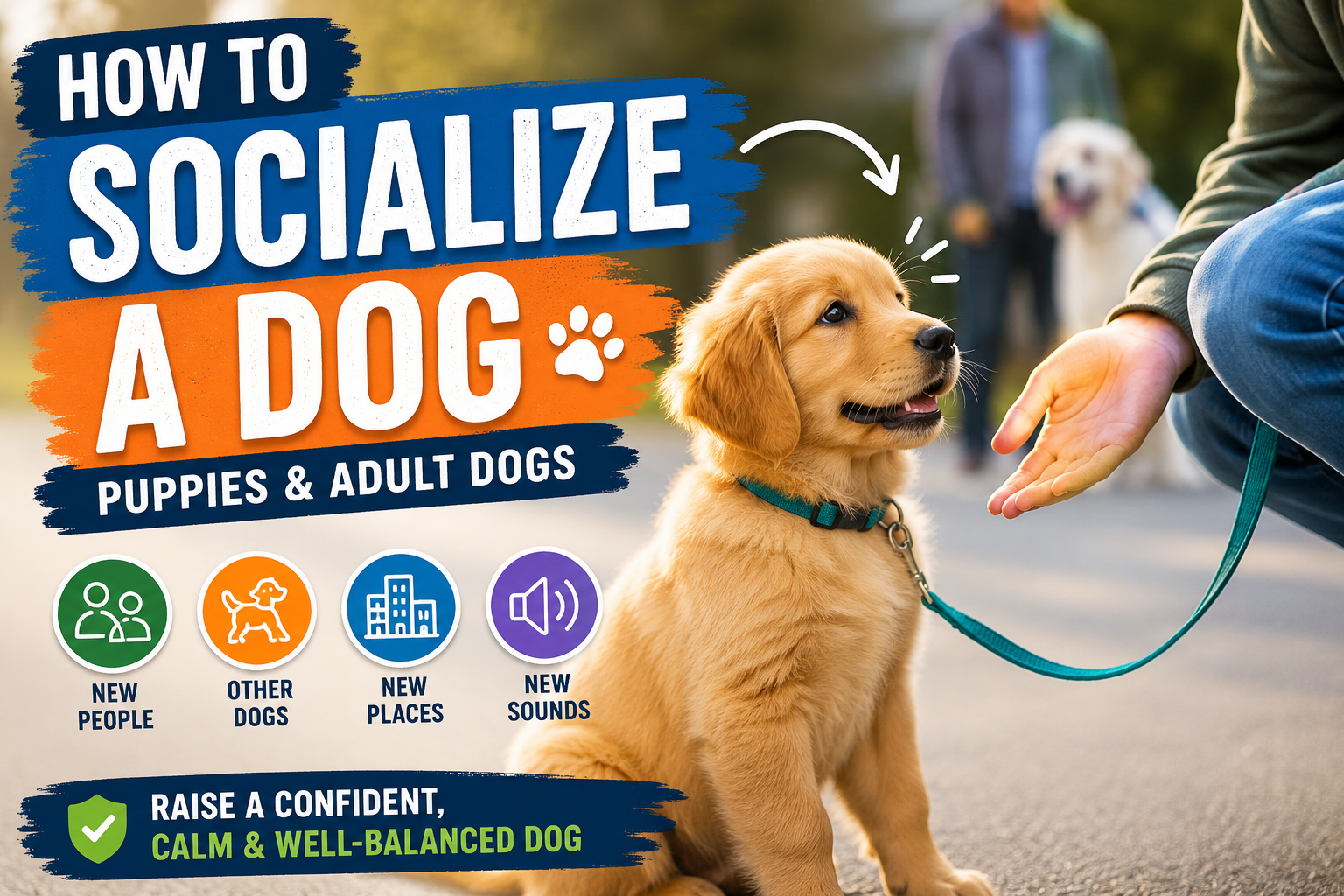
What Is Dog Socialization?
Dog socialization is the process of teaching a dog that the normal world, including strangers, other dogs, traffic, noises and new places, is safe and ignorable. Dog socialization training builds neutrality: the dog sees a jogger, a skateboard or another dog, registers it, and carries on. Socialization differs from making a dog friendly, and the difference decides walk quality for the dog’s whole life. A dog taught to greet everything learns to expect access, and expectation denied on a 6 foot leash converts into frustration barking and lunging. Most leash reactivity begins exactly there, as missed or misdirected socialization rather than bad temperament.
How to Socialize a Dog: The 6 Step Process
To socialize a dog at any age, work through 6 steps, from a baseline read to lifelong maintenance. The 6 steps of dog socialization are outlined below.
- Read the baseline: Watch the dog around one mild trigger at a distance. Loose body and soft eyes mean start closer; freezing, tucked tail or fixation means start farther. The dog sets the starting line, never the owner’s schedule.
- Find the threshold distance: The threshold is the distance where the dog notices the trigger and stays calm enough to take food. All socialization happens at or beyond this line. A dog too stressed to eat is too close to learn.
- Pair every exposure with something good: The trigger appears, the reward appears, the trigger leaves, the reward stops. Repetition rewires the association from unknown means danger to unknown means good things.
- Shrink the distance gradually: Close the gap in small steps across sessions, only advancing while the dog stays loose and eating. One calm session at 20 feet beats a shaking session at 5 feet, every single time.
- Vary everything: New people of different ages and looks, calm dogs of different sizes, surfaces, sounds, buildings, vehicles. Dogs generalize poorly, so ten friendly men in hats teach hats, not strangers.
- Maintain for life: Keep brief exposures running weekly after the foundation sets, especially through adolescence at 6 to 18 months, when confidence dips and unmaintained socialization quietly unravels.
What Age Should a Dog Be Socialized?
Dog socialization starts at 3 weeks of age and runs most powerfully until 14 to 16 weeks, the critical window when a puppy’s brain files new experiences as normal instead of threatening. After the window closes, socialization continues working at every age through slower, structured exposure. The table below shows what socialization looks like at each life stage.
|
Life Stage |
Age |
Socialization Approach |
|
Critical window |
3 to 14 weeks |
Brief daily exposures to people, dogs, sounds, surfaces and places. Experiences file as permanent normal. |
|
Late puppyhood |
14 weeks to 6 months |
Window closing. Continued daily exposure plus first structured group classes. |
|
Adolescence |
6 to 18 months |
Maintenance is critical: confidence dips, fear periods appear, and skipped exposure unravels earlier work. |
|
Adulthood |
18 months and up |
Structured threshold based sessions, 2 to 6 months to solid neutrality. Slower, fully possible. |
How to Socialize a Puppy
To socialize a puppy, run short daily exposures, 10 to 15 minutes each, across as many safe environments as possible before 14 weeks. The vaccine question worries every new owner, and the professional consensus answers it: the American Veterinary Society of Animal Behavior states that the behavioral risk of under socialization outweighs the disease risk of careful early exposure. Careful means paved and private surfaces over dog parks and grass, known vaccinated dogs over strange ones, and carrying the puppy through busy areas before the shot series completes.
Priority exposures inside the window: 100 different people across ages, sizes and looks, calm vaccinated adult dogs, car rides, vet office happy visits, handling of paws, ears and mouth, household noises at real volume, and 10 or more walking surfaces. Full lists and weekly targets live in the puppy socialization checklist, and the JPK9 puppy training program builds this entire foundation from 8 weeks.
How to Socialize an Adult Dog
To socialize an adult dog, replace the puppy immersion approach with threshold based structured exposure across 2 to 6 months. Adult brains file new things as suspicious by default, so the adult protocol runs slower and more deliberately, in 4 stages.
- Weeks 1 to 2: Observation only. Park bench sessions at heavy threshold distance, watching the world with rewards flowing. No greetings, no pressure, no agenda beyond calm watching.
- Weeks 3 to 6: Distance work. Parallel walks with one steady neutral dog at 20 to 30 feet, quiet street exposure, threshold shrinking only as the body stays loose.
- Weeks 7 to 12: Controlled proximity. Busier environments, closer passes, first brief and voluntary dog greetings of a few seconds, always ended by the handler before arousal climbs.
- Month 3 and beyond: Generalization. New neighborhoods, patios, stores that allow dogs, group class settings. Neutrality gets proofed everywhere it will be needed.
Rescue dogs with unknown histories follow the same 4 stages with a longer first stage, and adult dogs that lunge, growl or carry a bite history skip the self help route entirely: that profile is behavior modification territory, where a professional reads the thresholds a phone camera misses.
What Are Effective Dog Socialization Techniques?
The 7 most effective dog socialization techniques are listed below, ordered from lowest to highest intensity. Every technique obeys the same rule: the dog stays under threshold, and the session ends before fatigue.
- Bench watching: Sit at the edge of a busy area and reward calm observation. The foundation technique for every age.
- Pattern walking: Predictable figure eights near a trigger, so movement burns stress while exposure accumulates.
- Parallel walking: Two dogs, two handlers, same direction, 20 to 30 feet apart, closing gradually across sessions.
- Surface and sound sampling: Gravel, grates, tile, stairs, umbrellas, recorded thunder at low volume with rewards.
- Structured decompression walks: Long line sniffing in quiet nature, which lowers baseline stress and makes every other session easier.
- The 3 second greeting: When greetings begin, 3 seconds of sniffing, then the handler calls away, keeping every interaction short and successful.
- Group class neutrality: A controlled class with capped numbers teaches dogs to work calmly around other dogs, which is the real world skill owners actually need.
What Are the Signs of a Poorly Socialized Dog?
A poorly socialized dog shows 6 signs: barking or lunging at strangers and dogs, freezing or hiding in new places, refusing food away from home, overexcited uncontrollable greetings, startling at everyday sounds, and stiff body language around anything unfamiliar. The signs split into two directions, fear and frustration, and both trace to the same gap. Both directions respond to the exact protocols above, at the dog’s current age, starting from the current baseline.
What Mistakes Ruin Dog Socialization?
The 5 mistakes that ruin dog socialization are flooding, the dog park shortcut, forced greetings, punishing warning signals, and stopping after puppyhood. Each mistake is listed below with the fix.
- Flooding: Dropping an unprepared dog into overwhelming exposure teaches panic, not confidence. The fix is threshold distance, always.
- The dog park shortcut: Uncontrolled greetings, unscreened dogs and mixed play styles make dog parks one of the worst places to socialize an unsocialized dog. One bad rush installs a fear that takes months to undo.
- Forced greetings: Dragging a hesitant dog toward a person or dog converts hesitation into defensive behavior. Voluntary approach only, every time.
- Punishing warnings: Correcting a growl removes the warning system, not the fear. A dog that skips the growl goes straight to the bite.
- Stopping at 6 months: Socialization that ends when the window closes unravels through adolescence. Maintenance exposure continues for life.
Where to Socialize a Dog in the Sacramento Area
Sacramento area owners have strong socialization environments in every direction, used at threshold distance rather than in the middle of the crowd. In Elk Grove, the Old Town patio strip and the paths around Elk Grove Regional Park offer people, dogs and noise at controllable distances. Midtown Sacramento sidewalks and the edges of farmers markets deliver urban intensity in small doses, and the Davis Saturday market perimeter does the same at college town pace. Roseville’s Fountains, Vacaville’s Lagoon Valley perimeter and Napa’s dog friendly tasting patios each add a different flavor of real world exposure. The pattern for every location stays identical: the edge first, the middle never until the dog earns it.
For dog to dog work, controlled beats random every time, which is where the group obedience classes at JPK9 Academy in Elk Grove carry the load: classes cap at 8 dogs, every dog works on leash under one trainer, and owners regularly report the group setting as the safest socialization their dog ever got. Fearful and reactive dogs start with a $100 in person assessment instead, because those cases need the threshold read before any group exposure. The phone consultation is free for owners anywhere from Sacramento and Elk Grove to Roseville, Davis, Vacaville and Napa.
Dog Socialization: Frequently Asked Questions
Can you socialize an older dog?
Older dogs socialize successfully at any age through gradual, distance based exposure rather than the immersion that works for puppies. The socialization window closing at 14 to 16 weeks changes the method and the timeline, never the possibility: adult progress runs in weeks and months instead of days.
How long does it take to socialize a dog?
Socializing a puppy inside the 3 to 14 week window takes daily exposures across 4 to 8 weeks. Socializing an adult dog takes 2 to 6 months of structured sessions, with fearful or reactive dogs running longer. Consistency of exposure decides the timeline more than the dog’s age.
What happens if a dog is never socialized?
An unsocialized dog treats normal life as a threat: strangers trigger barking, other dogs trigger lunging, and new places trigger shutdown or panic. Under socialization ranks among the leading causes of fear based aggression, and most leash reactivity cases begin as missed socialization, not bad temperament.
Are dog parks good for socializing a dog?
Dog parks rank among the worst socialization environments for unsocialized dogs, because uncontrolled greetings, mixed play styles and zero screening teach exactly the wrong lessons. One bad rush from a pushy dog can install a fear that takes months to undo. Controlled, distance based exposure works; chaos does not.
Does socialization mean meeting lots of dogs and people?
Socialization means calm exposure, not maximum interaction. A well socialized dog notices strangers, dogs, traffic and noise, then ignores them. Dogs taught to greet everything they see develop frustration reactivity when access gets denied on leash, which is why neutrality, not friendliness, is the actual training goal.
How do you socialize a dog with other dogs?
Dog to dog socialization starts with parallel walks at 20 to 30 feet, both handlers moving the same direction without contact. Distance shrinks across sessions as both dogs stay relaxed, and brief sniff greetings come last, never first. One steady, neutral dog beats five random ones.
How do you socialize a fearful or reactive dog?
Fearful and reactive dogs socialize through threshold work: exposure at the distance where the dog notices the trigger and stays calm enough to eat. Pushing closer than the threshold rehearses the fear instead of replacing it. Cases with lunging, growling or a bite history belong with a professional trainer.
How often should a dog be socialized?
Puppies inside the window need brief daily exposures, 10 to 15 minutes each, across varied environments. Adult dogs progress on 3 to 4 structured sessions weekly. Socialization then continues for life at maintenance level, because confidence fades in dogs that stop seeing the world, especially through adolescence.