
Quick Answer: What Is a Dog Training Camp?
A dog training camp also called board and train or dog boot camp is a residential program where the dog stays at the training facility full-time and receives daily professional training sessions throughout the program. Dogs return home off-leash trained, reliably obedient, and behaviorally transformed. JPK9 Academy runs training camps from its facility at 4202 Point Pleasant Road in Elk Grove, serving Sacramento and surrounding Northern California cities.
- Camp length: 2 weeks (foundation) or 4 weeks (full transformation)
- Programs: obedience, aggression, potty training, reactive dogs, behavior modification
- What is included: daily training, boarding, real-world proofing, owner handoff sessions, lifetime support
- Starting price: from $2,800
Ready to Enroll Your Dog in a Training Camp?
JPK9 Academy runs residential training camps year-round from its Elk Grove facility at 4202 Point Pleasant Road. Spots are limited, the small program size that makes the training effective also means enrollment is capped.
The next step is a free phone consultation. Juan will ask about the dog’s age, breed, current behavior, training history, and specific goals. No commitment is required at the consultation. Families leave the call with an honest program recommendation and a realistic picture of what the training camp will produce for their specific dog
What Is a Training Camp for Dogs?
A dog training camp is a residential training program where the dog lives at a professional training facility for a set period typically two to four weeks and receives structured daily training from a professional trainer throughout the stay. Unlike weekly group classes or private lessons where the owner brings the dog in for an hour and then takes it home, a training camp is an intensive immersion experience. The dog is in a training environment seven days a week, working with the same professional handler every single day.
The result is behavioral change that would take six to twelve months of weekly private lessons to achieve in two to four weeks of concentrated, daily professional work.
Training camps are not a new concept in professional dog training. They have been used for decades in working dog programs police K9 training, protection dog preparation, military dog conditioning because the residential format produces faster, more durable behavioral results than any other program type. The consumer dog training market adapted this format into what is now commonly called board and train, dog boot camp, or dog training camp. All three terms describe the same core structure: the dog lives with the trainer and trains daily.
JPK9 Academy’s training camp operates from 4202 Point Pleasant Road in Elk Grove, approximately 10 to 20 minutes from most Sacramento neighborhoods, and serves dog owners throughout Sacramento, Elk Grove, Roseville, Folsom, Rancho Cordova, Davis, Vacaville, Fairfield, Napa, and surrounding Northern California areas.
Training Camp vs Board and Train vs Dog Boot Camp: Are These the Same Thing?
Yes. These three terms describe the same program type with different marketing names.
Training camp for dogs — the most commonly searched term among owners looking for an intensive residential program. It suggests a structured, camp-like environment with a defined curriculum and a defined outcome.
Board and train — the industry-standard term used by professional trainers. Describes the format accurately: the dog boards (lives at the facility) and trains (receives daily professional training sessions) simultaneously.
Dog boot camp — the most dramatic marketing term. Borrowed from military language to convey intensity. The program behind this label is identical to board and train when run by a qualified trainer.
Day training or doggy day camp — a different format where the dog comes to the facility during daytime hours, trains, and goes home each evening. This is NOT the same as a residential training camp. The daily repetition and 24/7 structured environment of a true residential camp produces faster and more durable results than day training.
When evaluating any of these programs, the name matters far less than the substance behind it. Ask: who specifically handles the dog, how many hours of direct training happen each day, what does the daily schedule look like, and what is included at pickup when the dog comes home. Owners who prefer to stay directly involved in the training process throughout may find that private lessons are a better fit than a residential camp.
What Actually Happens Inside a Dog Training Camp
This is the section most training camp websites skip entirely. They say “daily training” without ever showing what that means. Here is what a professional residential training camp day actually looks like at JPK9 Academy.
Morning (7:00–9:00 AM)
The day starts with the dog’s morning routine, feeding, bathroom break, and a calm settling period. Dogs that are calm and food-motivated in the morning are in an optimal learning state. The first training session of the day begins once the dog has settled. Morning sessions typically focus on foundation commands: sit, down, place, stay with duration, and basic leash manners. The environment is calm and controlled to allow the dog to learn without competing distractions.
Midday (11:00 AM–1:00 PM)
The second training session introduces distraction. This is where real-world proofing begins. Sacramento and Elk Grove provide a wide range of training environments — busy parking lots near the Elk Grove Regional Park, the trail along Bruceville Road, the Laguna Town Hall area with foot traffic and cyclists. Dogs are taken into these real environments and asked to perform the commands they learned in the morning’s controlled session while actual distractions are present. This is the critical step most group classes and weekly private lessons skip because they lack the time — building reliable behavior in the same messy environments the dog actually lives in.
Afternoon (3:00–5:00 PM)
The third daily session focuses on consolidating gains and building duration and distance. A dog that sits reliably at five feet from the handler in a parking lot needs to be able to sit reliably at 30 feet with the handler out of sight before the behavior is truly trained. Afternoon sessions build this distance and duration systematically. Advanced dogs in the later weeks of the program work on off-leash reliability, performing commands with the leash dropped or removed entirely.
Evening (6:00–8:00 PM)
The final session of the day is decompression and calm reinforcement. Short sessions reinforcing the day’s work, calm socialization, and establishing the dog’s evening routine. Dogs need mental downtime to consolidate what they have learned. An overstimulated dog in constant training mode does not learn efficiently. The structured daily schedule balances intensive training with appropriate rest.
What this delivers: A dog in a professional training camp receives four structured training sessions per day versus one 60-minute session per week in a typical private lesson program. Over a 28-day camp, that is 112 training sessions versus 4. The accelerated behavioral change is a direct result of this repetition.
Types of Dog Training Camps
Not all training camp programs are built for the same goals. Understanding which type of camp addresses the dog’s specific situation is the most important decision an owner makes before enrolling.
Basic Obedience Training Camp
Best for: Puppies, adult dogs with no serious behavioral problems, owners who want a reliably trained dog without managing a private lesson curriculum themselves.
What gets trained: Sit, down, place, stay with duration and distance, come when called, loose leash walking, door manners, polite greetings, impulse control, off-leash reliability.
Program length: 2 to 4 weeks depending on the dog’s starting point and the behavioral goals.
What to expect at graduation: A dog that responds reliably to all foundation commands in real-world environments, including busy streets, parks, and situations with other dogs and people present. Off-leash reliability in controlled environments. Owner who has been trained on how to maintain and build on the progress.
Behavior Modification Training Camp
Best for: Dogs with reactivity, leash lunging, fear responses, anxiety, resource guarding, or other behavioral issues that go beyond obedience and require emotional change alongside command training.
The key difference from basic obedience camp: Behavior modification changes how the dog feels about a trigger, not just what the dog does. A reactive dog does not need to learn to sit. It needs its emotional response to other dogs changed through systematic desensitization and counter-conditioning. This is a different discipline from obedience training, takes more time, and requires more expertise from the trainer.
Program length: Typically 3 to 4 weeks minimum. Some complex cases require follow-up sessions after the initial camp.
What to expect: Dogs complete behavior modification camps with improved threshold management — the ability to function calmly in the presence of triggers that previously caused a full reaction. Behavior modification is not a one-time fix. It is a significant behavioral shift that requires the owner to understand the maintenance protocol to preserve long-term results. Learn more about JPK9 Academy’s behavior modification programs.
Training Camp for Aggressive Dogs
See the dedicated section below.
Advanced Training Camp
Best for: Dogs that have completed foundation training and owners who want off-leash reliability, advanced obedience, or preparation for sport, service work, or public access environments.
What gets trained: Advanced heel work, distance commands, off-leash reliability in high-distraction public environments, recall under maximum distraction, advanced place and stay, complex command sequences.
Who this serves at JPK9 Academy: Working breed owners, Belgian Malinois and German Shepherd owners, and owners who have completed a foundation camp and want to continue building on that foundation.
Training Camp for Aggressive Dogs in Sacramento
Of all the training camp searches in the Sacramento area, “dog training camps for aggressive dogs” represents the most urgent need and the most underserved content. Families dealing with a dog that has bitten, lunged with intent, or been flagged by a veterinarian as a bite risk are often in a crisis situation. They need accurate information fast.
What Aggressive Dog Training Camp Actually Addresses
Dog aggression is not one condition. It is a category of behaviors with multiple root causes, each requiring a different protocol. A training camp that accepts all aggression cases without distinguishing between types is not running a specialized program, it is running a generic program and hoping it works.
At JPK9 Academy, aggressive dog training camps begin with a behavioral assessment before any program is recommended. The assessment identifies:
- The type of aggression (dog-to-dog, human-directed, resource guarding, fear-based, redirected, territorial)
- The trigger hierarchy (what specifically triggers the response and in what order of intensity)
- The dog’s threshold (the distance from the trigger at which the dog begins reacting)
- The warning signal sequence (whether the dog gives warnings before escalating or goes directly from calm to bite)
- The bite history (has the dog bitten, how many times, what was the severity, what were the circumstances)
This assessment takes 45 to 60 minutes and happens before any program commitment. No qualified trainer agrees to take an aggressive dog case without this information.
What Happens During an Aggressive Dog Training Camp
The first week of an aggressive dog camp does not look like obedience training. It looks like management and threshold mapping. The trainer establishes exactly where the dog’s threshold sits for each trigger type and builds the initial working distance that allows the dog to function without going over threshold.
Training below threshold is not optional in aggression rehabilitation. It is the mechanism by which desensitization works. A dog that is pushed over threshold during every training session is not being desensitized, it is being repeatedly traumatized, which deepens the aggression rather than resolving it.
Week two and three of the camp begin systematic counter-conditioning. The trigger is presented at below-threshold distance while the dog is simultaneously exposed to something it genuinely values, high-value food, play, or handler engagement. Over hundreds of repetitions, the dog’s nervous system begins to associate the trigger with something positive rather than something threatening. The reaction threshold begins to shift outward.
Week four (for complex aggression cases) moves into controlled exposure the trigger is gradually brought closer over multiple sessions as the dog demonstrates it can remain below threshold at the previously established distance. This is the functional rehabilitation phase.
What Families Should Realistically Expect
Aggressive dog training camps do not produce dogs that no longer feel anything around their triggers. They produce dogs that can function safely around their triggers within the boundaries established by the program. The difference matters.
A dog that lunged at every dog within 50 feet before camp may complete the program able to walk calmly past dogs at 8 feet when the owner is handling correctly and the environment is managed appropriately. That is real, measurable progress. That is what makes a family safe. That is not the same as saying the dog is now fully neutral toward all dogs in all environments forever.
Families dealing with aggression need honesty, not promises. JPK9 Academy will tell any family before a program begins exactly what the realistic outcome looks like for their specific dog and situation.
Call (916) 571-0157 for an honest assessment. Learn more about JPK9 Academy’s Dog Aggression Training program.
Potty Training Camp for Dogs
Housetraining failure is one of the most common reasons dogs are surrendered to shelters. It is also one of the most misunderstood training challenges because most owners approach it as a discipline problem when it is actually a management and reinforcement problem.
What Potty Training Camp Covers
JPK9 Academy’s board and train programs include potty training as a standard component for puppies and adult dogs that have not been reliably housetrained. During the residential camp, the trainer establishes:
A consistent schedule: Dogs do not have accidents because they are stubborn or spiteful. They have accidents because no one has taught them what the schedule is. The training camp establishes a consistent schedule of outdoor bathroom breaks tied to predictable events (waking up, after eating, after play, before sleep) so the dog’s bladder and routine become synchronized.
Crate training as the foundation of housetraining: A dog that is crate trained is a dog that is almost always housetrained. Dogs instinctively avoid eliminating in their sleeping space. A correctly sized crate used at appropriate intervals gives the dog the information it needs: outside is where elimination happens, not inside.
Positive reinforcement for outdoor elimination: Every successful outdoor elimination during the training camp is marked and rewarded immediately. The dog learns that going outside produces something good. This is the foundational learning that makes housetraining stick.
Recognition of pre-elimination signals: During the camp, the trainer identifies the specific signals the individual dog uses before it needs to go, sniffing in circles, leaving the room, sitting by the door, beginning to squat. These signals are documented and communicated to the owner at handoff so the owner can read them accurately at home.
What Potty Training Camp Does NOT Include
Punishment for accidents. This point matters enough to state directly. Punishment-based housetraining, rubbing the dog’s nose in accidents, yelling, physical corrections does not teach the dog where to go. It teaches the dog to hide from the owner when it needs to eliminate, which produces more accidents in hidden locations rather than fewer accidents overall. According to the American Veterinary Society of Animal Behavior, punishment-based methods used during training can cause fear and aggression outcomes that require significantly more expensive behavioral intervention to address later. If a training program mentions punishment as part of its potty training methodology, that is a disqualifying red flag.
Realistic Expectations for Potty Training
For puppies under 4 months, full housetraining reliability is not achievable because puppies physically cannot control their bladder for extended periods at that age. The camp establishes the routine, builds the behavior, and sets the foundation. Full reliability comes as the puppy’s bladder matures at 4 to 6 months.
For adult dogs with a long history of indoor elimination, potty training during the camp is fully achievable. Adult dogs have full bladder control and learn schedule-based housetraining faster than puppies when the protocol is applied correctly.
Training Camp for Dogs Near You : What to Look For
Here is the evaluation framework that applies to any residential dog training camp, not just JPK9 Academy.
Question 1: Who specifically handles the dog?
This is the most important question for any training camp and the one most facilities answer vaguely. Some facilities use rotating staff handlers, with the head trainer occasionally checking in. The dog is handled by junior staff or volunteers for most of its daily training. The marketing page shows the head trainer. The actual training is done by employees at various skill levels.
At JPK9 Academy’s Elk Grove facility, Juan Portillo personally handles every dog throughout the full program. This is not a staffing model that scales to 20 dogs at a time. It is intentional. The quality of the outcome is directly tied to the quality and consistency of the handler.
A trainer who has spent 15+ years working with working dog breeds like Rottweilers, Malinois, and German Shepherds brings a completely different depth of understanding to those cases than someone whose experience is limited to companion dog obedience. The Certification Council for Professional Dog Trainers maintains a searchable directory of credentialed trainers that owners can use to verify any trainer’s credentials before enrolling.
Question 2: What does a typical day look like hour by hour?
A training camp that cannot describe a specific daily schedule is not running a structured program. Ask for a breakdown of when training sessions happen, how long each session is, what the rest of the day looks like, and what environment the dog lives in between sessions.
Question 3: Is there an assessment before the program starts?
A qualified training camp does not accept dogs blindly. Every dog that enters JPK9 Academy’s program first goes through a behavioral assessment that establishes current behavior, identifies triggers, and determines the appropriate program type and length. A camp that accepts your dog after a phone call and payment, without asking detailed questions about the dog’s history and behavior, is not running a professional operation.
Question 4: What does the owner handoff include?
The owner handoff session at the end of the camp is where the long-term result is determined. See the full section on this below. If the answer is “we’ll go over everything at pickup in 15 minutes,” the program is incomplete.
Question 5: What is included after the camp ends?
Post-program support is the difference between a one-time service and a genuine investment in the dog’s future. JPK9 Academy includes lifetime support with every training camp program. This means any question, behavioral regression, or new challenge that arises after the dog comes home gets addressed with a phone call or follow-up session. The training does not end at pickup.
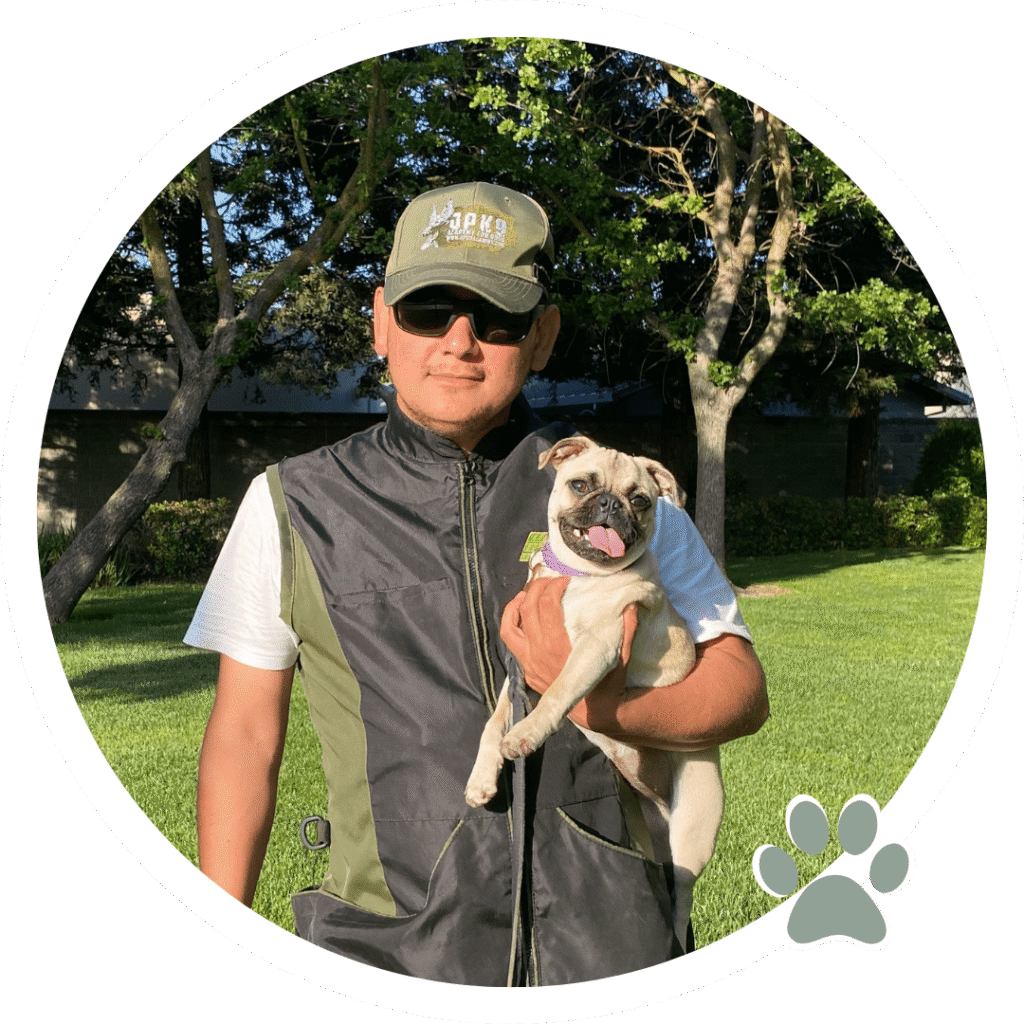
How JPK9 Academy's Training Camp Works
JPK9 Academy runs residential training camps from 4202 Point Pleasant Road in Elk Grove, CA. The facility serves Sacramento and all surrounding Northern California communities including Roseville, Folsom, Rancho Cordova, Carmichael, Fair Oaks, El Dorado Hills, Davis, Vacaville, Fairfield, Napa, Rocklin, Woodland, and Stockton.
Step 1: Free Phone Consultation
Every JPK9 training camp starts with a free phone consultation. Juan asks about the dog’s age, breed, training history, current behavior, household environment, and specific goals. This is not a sales call. It is an honest assessment of whether the dog is a good fit for a training camp format and which program type makes sense for the individual dog.
Step 2: Behavioral Assessment
Before the camp begins, the dog comes in for a hands-on behavioral assessment at the Elk Grove facility. This establishes baseline behavior, identifies any triggers or safety considerations, and confirms the program recommendation from the phone consultation. Assessment results are documented and shared with the owner.
Step 3: Camp Begins
The dog stays at the facility full-time throughout the program duration. Daily training follows the structured schedule described above, typically three to four training sessions per day at progressive difficulty levels. Real-world proofing happens throughout Sacramento and Elk Grove environments. The owner receives regular updates on progress.
Step 4: Owner Handoff Sessions
The final phase of every JPK9 training camp is the owner handoff. This is not a 15-minute orientation. It is a full session where Juan demonstrates the dog’s current skill level and then transfers that handling to the owner directly. The owner practices every command with the dog while Juan coaches in real time. The dog is not released until the owner can handle it at the same level the dog was trained to perform.
Step 5: Lifetime Support
After the dog goes home, the training relationship does not end. Every JPK9 training camp includes lifetime follow-up support. If the dog shows regression at six months, if a new behavior appears after a household change, if the owner needs a refresher a phone call to (916) 571-0157 is all it takes.
Program options:
- 2-Week Training Camp (Foundation): From $2,800 — puppy foundation, basic obedience, potty training
- 4-Week Training Camp (Transformation): $3,200–$4,200 — full behavioral transformation, reactivity, aggression, advanced off-leash
Learn more: Board and Train Programs at JPK9 Academy
What to Expect at Pickup: The Owner Handoff Session
The owner handoff session is the most important part of a dog training camp and the part most trainers handle poorly. Understanding what it should look like helps owners evaluate any program they consider.
What a proper handoff includes:
The trainer demonstrates every command the dog has learned during the camp, showing the dog’s current level of reliability, in the actual environments the behavior was proofed in. This gives the owner an accurate picture of what the dog can do before handling begins.
The trainer then transfers handling to the owner command by command. The owner gives the cue. The dog responds. The trainer coaches the owner’s timing, body language, and technique in real time. This is the step where the owner learns how to handle the dog, not just watch the trainer handle it.
The trainer walks through the maintenance protocol: how to continue proofing the trained behaviors, what progression looks like over the next 30 to 60 days, and what situations to avoid or manage carefully in the early weeks after homecoming.
The trainer documents the dog’s current training status in writing and provides the owner with a clear reference guide for daily practice.
What an inadequate handoff looks like:
A 15-minute walkthrough where the trainer shows the dog performing commands, hands the leash to the owner, and sends them home with a verbal summary. The owner has watched the dog behave. The owner has not been taught how to make the dog behave. Within two to four weeks, the training begins degrading because the owner is not handling at the level the dog was trained to respond to.
This is the most common reason dog owners say “the training camp worked for a few weeks and then stopped working.” The camp was fine. The handoff was inadequate.
At JPK9 Academy, every owner handoff is a structured session that does not end until the owner can handle the dog confidently at the dog’s current skill level.
Is a Training Camp Right for My Dog?
Training camps are the right choice for some dogs and owners and not the right choice for others. Here is an honest breakdown.
Training Camp Is Likely the Right Choice If:
The owner has a demanding schedule that makes daily training homework impractical. Board and train produces the same outcome regardless of the owner’s availability during the program, the trainer handles the daily work.
The dog has established problem behaviors that need intensive daily repetition to change. A reactive dog that has been practicing the same reactive behavior for two years needs daily counter-conditioning work at below-threshold distances, not once-weekly sessions.
The owner wants the fastest possible path to a fully trained dog. Four weeks of daily professional training produces behavioral change that would take 6 to 12 months of weekly private lessons to achieve.
The puppy is in the socialization window (8 to 16 weeks) and the owner wants to maximize behavioral shaping during the highest-plasticity developmental period.
The household is experiencing a genuine safety crisis, a dog with a bite history, aggression toward children, or behavior that has become unmanageable and the situation requires immediate intensive intervention.
Training Camp May Not Be the Right Choice If:
The dog has severe separation anxiety and shows signs of clinical distress when separated from its primary owner. Some separation anxiety cases worsen in a residential camp environment before they improve, and this needs to be assessed carefully before enrollment.
The owner wants to be hands-on throughout the training process and prefers to learn alongside the dog from day one. Private lessons are the better fit for this learning style.
The budget does not accommodate the program cost. Training camps are the highest per-program investment in professional dog training. If the budget ceiling is below the program minimum, group classes or private lessons are the appropriate starting point.
The dog has a medical condition that makes a residential environment with other dogs or a different daily routine medically risky. These cases require veterinary clearance before any residential program.
Frequently Asked Questions About Dog Training Camps
What is a training camp for dogs?
A training camp for dogs is a residential program where the dog lives at a professional training facility and receives structured daily training sessions throughout the program — typically two to four weeks. It is the same program type as board and train and dog boot camp. The dog returns home reliably trained in foundation obedience, behavior modification outcomes, or both, depending on the program. Owner handoff sessions teach the owner how to maintain the training after the dog comes home.
How much does a dog training camp cost?
Dog training camps cost $2,800 to $4,200 at JPK9 Academy depending on program length and behavioral complexity. Two-week foundation camps start at $2,800. Four-week transformation programs for dogs with aggression, reactivity, or advanced behavioral goals run $3,200 to $4,200. All programs include daily training, boarding, real-world proofing in Sacramento and Elk Grove environments, owner handoff sessions, and lifetime post-program support. For a detailed cost breakdown, see: How Much Does Dog Training Cost?
How long is a dog training camp?
Most professional dog training camps run two to four weeks. Two-week programs are appropriate for puppies and adult dogs with no serious behavioral problems who need foundation obedience. Four-week programs are appropriate for dogs with reactivity, aggression, potty training failure, off-leash reliability goals, or behavioral complexity that requires more time and real-world proofing. Program length should be determined by the dog’s individual needs, not by a fixed menu, ask any trainer why they are recommending the length they suggest.
Are dog training camps effective?
Training camps are the most time-efficient format for producing behavioral change in dogs. The residential structure means the dog receives professional training three to four times per day rather than once per week in a private lesson program. Over a four-week camp, that is approximately 112 training sessions versus 4 private lessons. The accelerated repetition produces faster and more durable behavioral results. Effectiveness depends on three factors: the quality of the trainer, whether the program includes a proper owner handoff, and whether the owner maintains the training protocol after the dog comes home.
What is included in JPK9 Academy’s training camp?
JPK9 Academy’s training camp includes daily professional training sessions throughout the full program duration, boarding and 24/7 care at the Elk Grove facility, real-world proofing in Sacramento and Elk Grove public environments, multiple owner handoff sessions before and after the dog goes home, written documentation of the dog’s training progress and maintenance protocol, and lifetime post-program support. Current program pricing starts at $2,800. Call (916) 571-0157 for current availability and to discuss which program fits the dog’s specific needs.
Can aggressive dogs attend a training camp?
Yes. JPK9 Academy specifically accepts aggression cases that other Sacramento-area trainers decline. A full behavioral assessment is required before any aggressive dog is enrolled in a camp program, because aggressive behavior has multiple root causes requiring different protocols. Dogs with bite histories, dog-to-dog aggression, human-directed aggression, and resource guarding are accepted on a case-by-case basis after assessment. Learn more: Dog Aggression Training in Sacramento
Can a training camp fix potty training problems?
Yes. JPK9 Academy’s residential training camp includes potty training as a standard component for puppies and adult dogs that have not been reliably housetrained. The camp establishes a consistent schedule, builds positive outdoor elimination behavior, installs crate training as the foundation of housetraining, and documents the dog’s specific pre-elimination signals so the owner can read them accurately at home. Full potty training reliability for puppies under 4 months depends on physical bladder development alongside behavioral conditioning.
What happens when the dog comes home from training camp?
The dog returns home after the owner completes the handoff session at JPK9 Academy. The handoff session involves the trainer demonstrating the dog’s skills and then transferring handling to the owner directly, the owner practices every command with the dog while the trainer coaches. The owner leaves with a written maintenance protocol. Lifetime support is included: any behavioral question or regression that appears after homecoming is addressed with a follow-up call or session at no additional cost.
How do I find a training camp for dogs near me in Sacramento?
Sacramento-area dog owners looking for a residential training camp can contact JPK9 Academy at (916) 571-0157. The facility is at 4202 Point Pleasant Road in Elk Grove, accessible from all Sacramento metro neighborhoods in 10 to 25 minutes. When comparing training camps in the Sacramento area, ask specifically who handles the dog daily (not just who the head trainer is), what the daily schedule looks like in detail, whether an assessment happens before enrollment, and what the owner handoff session includes. These questions reveal the actual quality of any program behind the marketing.
What is the difference between a training camp and private lessons?
Private lessons keep the dog at home between sessions. The owner brings the dog in for a 60-minute session once per week, and the owner practices the assigned homework daily between sessions. The outcome depends heavily on owner consistency. Training camp is residential, the dog lives at the facility and receives three to four professional training sessions per day throughout the program. Training camp produces faster results and is less dependent on owner execution during the program itself, but requires a structured owner handoff at the end to ensure the results transfer home.
Does JPK9 Academy offer a puppy training camp?
Yes. JPK9 Academy’s two-week foundation camp is appropriate for puppies from 8 weeks of age and includes foundation obedience, potty training, crate training, bite inhibition, socialization, and leash manners. Puppies enrolled during the socialization window (8 to 16 weeks) benefit from professional daily training during the period when behavioral plasticity is highest, producing the fastest and most durable foundation. Learn more: Puppy Training at JPK9 Academy
Ready to Transform Your Dog?
JPK9 Academy has helped hundreds of Sacramento and Elk Grove families achieve real, lasting results. The first step is a free 10-minute phone call, no pressure, no commitment, just an honest conversation about your dog.